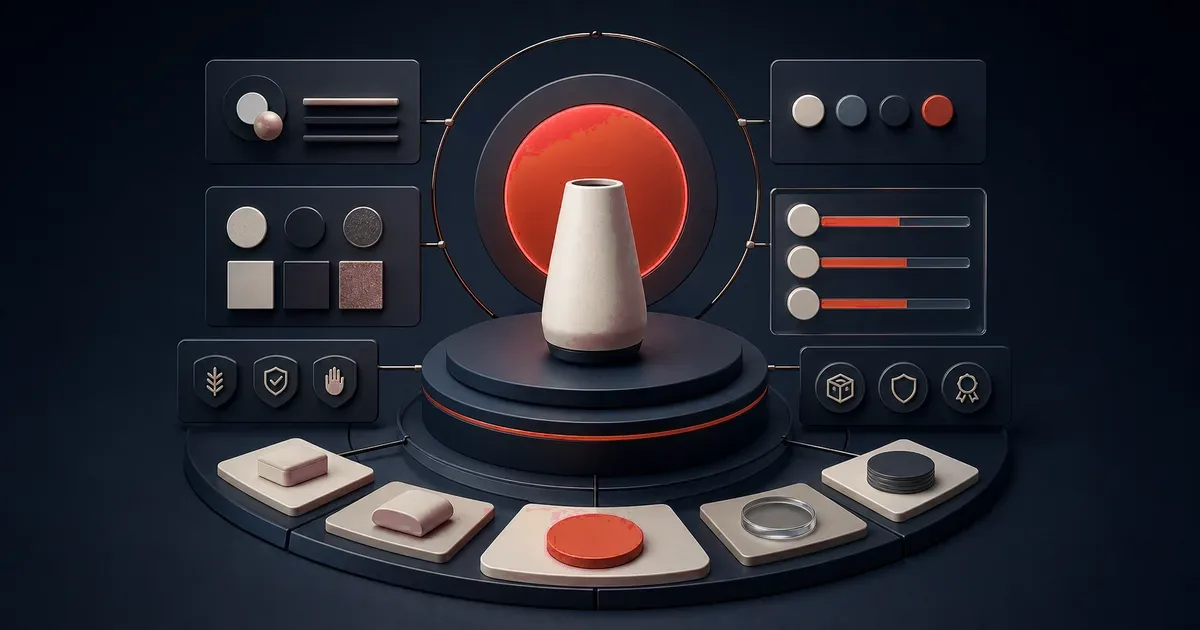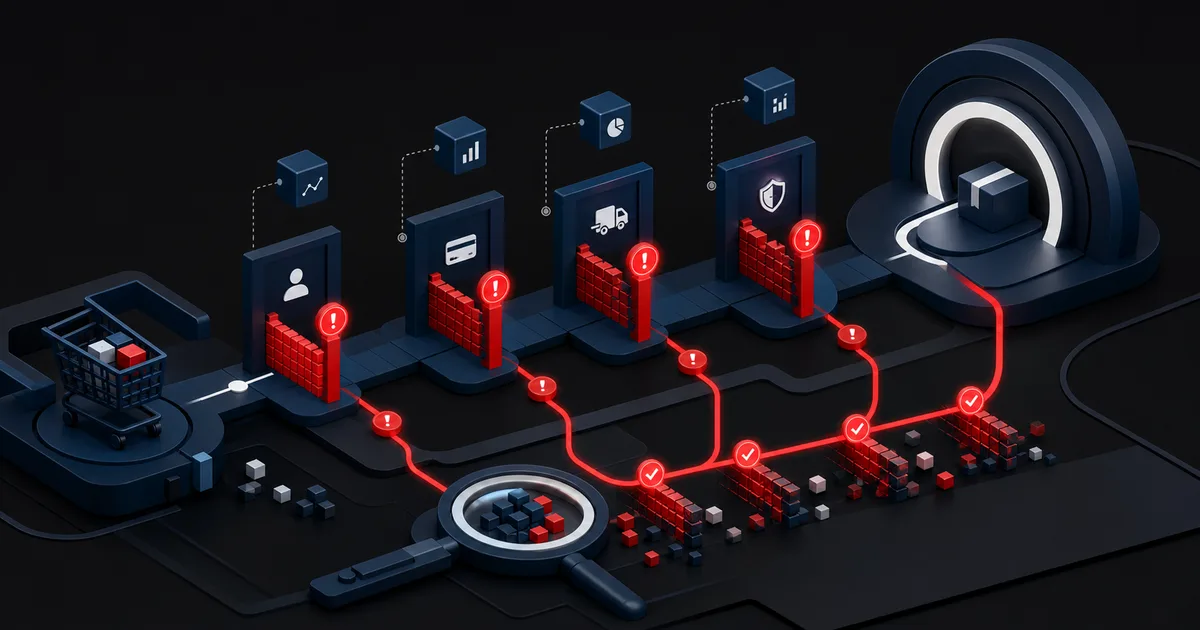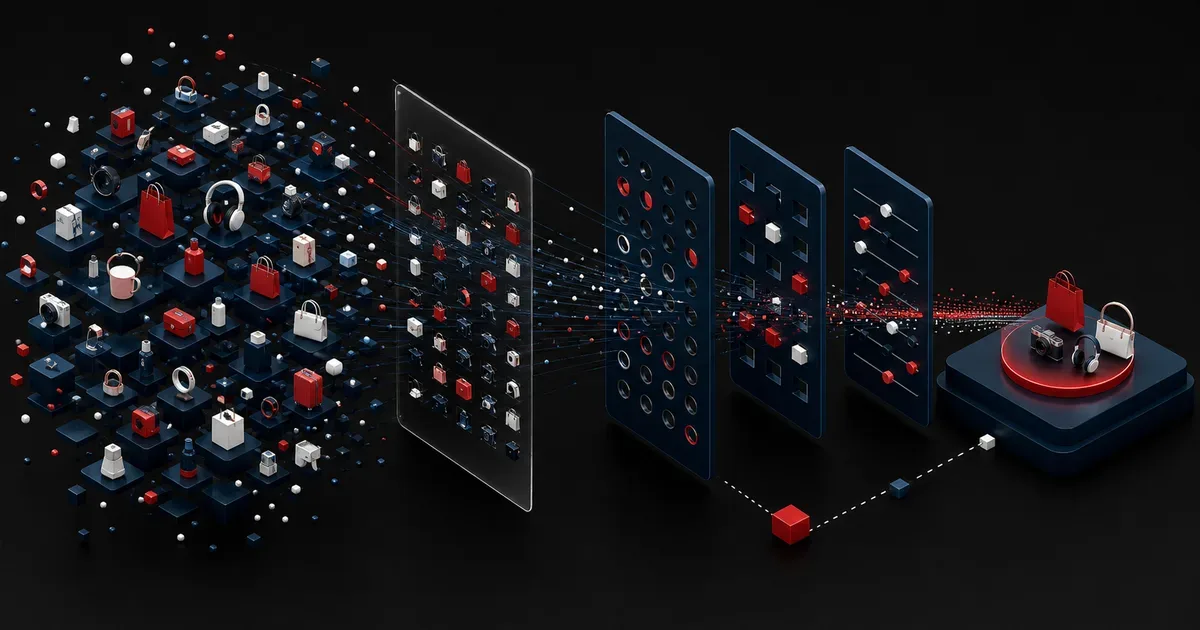
Headless commerce separates the customer-facing experience from core commerce capabilities through APIs. That can support distinctive interfaces, multiple channels, and independent release cycles. It can also replace a managed storefront with a custom software product that your organization must design, host, test, secure, monitor, and evolve. The right question is not whether headless is modern; it is whether the value of independence exceeds the permanent operating cost.
Shopify's documentation describes custom storefronts, Storefront API, and Hydrogen as tools for building tailored commerce experiences. The documentation also makes the engineering responsibility visible: teams must choose an approach, implement data access and rendering, and operate the resulting storefront. Capability does not remove ownership.Shopify Developers — Custom storefronts (opens in a new tab)Shopify Developers — Storefront API reference (opens in a new tab)Shopify Developers — Hydrogen (opens in a new tab)
1. Understand What Headless Is—and What It Does Not Solve
Headless changes the boundary between experience and commerce services. It does not automatically fix unclear positioning, weak product data, slow fulfillment, poor merchandising, or an undisciplined design system. Custom code can make those problems more expensive by spreading them across integrations.
Define the constraint in customer terms: a channel the current storefront cannot serve, a workflow that blocks conversion, or a release dependency that repeatedly delays value. If the desired outcome can be achieved through theme improvements, platform extensions, or a hybrid route, full separation may be unnecessary.
Treat headless as an operating model. Product, design, frontend, backend, QA, security, analytics, content, and commerce operations need enduring ownership after launch.
2. Compare Traditional, Hybrid, and Headless on the Same Criteria
A traditional managed storefront usually offers the fastest path for standard commerce needs and a smaller maintenance surface. A hybrid model keeps core templates while introducing custom experiences for selected journeys. Full headless maximizes interface independence but requires the strongest engineering and operational capability.
Compare options using time to first value, experience differentiation, channel needs, content workflow, integration complexity, release frequency, performance ownership, resilience, accessibility, and total cost. Do not score headless highly simply because it allows something the business has no plan to use.
Include reversibility. A phased hybrid experiment can validate a high-value journey without committing the whole store.
| Criterion | Traditional | Hybrid | Headless |
|---|---|---|---|
| Initial delivery | Usually fastest | Focused complexity | Largest custom scope |
| Experience control | Platform-shaped | Selective | Broad |
| Operating burden | Lower | Shared | Highest |
| Best fit | Standard journeys | Validated exceptions | Sustained multi-experience need |
3. Look for Strong Value Signals
Good signals include several customer experiences sharing commerce services, a proven need for highly differentiated interaction, content and commerce workflows that cannot be reconciled in the current system, or teams that need genuinely independent release cycles.
The organization should already have stable product data, API discipline, observability, automated tests, accessibility practice, incident ownership, and a funded product team. Headless does not create these capabilities; it depends on them.
Weak signals include competitor imitation, dissatisfaction with a theme that could be redesigned, or an assumption that an unfamiliar stack is automatically faster.
- A customer problem is repeatedly evidenced.
- The platform constraint is documented, not assumed.
- The value recurs across releases or channels.
- The product and engineering team can own the storefront permanently.
- A smaller extension or hybrid test cannot deliver the same value.
4. Calculate Total Cost of Ownership, Not the Proposal Price
Include discovery, design system, frontend, middleware, hosting, search, preview, localization, analytics, testing, accessibility, monitoring, security, incident response, platform upgrades, and ongoing feature work. Integration changes and staff continuity matter after the launch budget is gone.
Model a realistic three-year range with assumptions and uncertainty. Compare it with the cost of staying—including lost opportunity and platform constraints—so the conventional option is not treated as free.
Add organizational cost: editors may lose preview capability, campaigns may need engineering support, and teams may need new release processes. A lower infrastructure bill can still accompany a higher operating burden.
| Cost layer | Examples |
|---|---|
| Build | Discovery, design, implementation, migration |
| Run | Hosting, monitoring, support, incidents |
| Change | Features, APIs, platform upgrades |
| Organization | Training, workflow, specialist capacity |
5. Hypothetical Scenario: A Mid-Market Store Seeking a Premium Content Experience
This is a hypothetical scenario. A retailer believes headless is required because campaign pages feel generic. Research shows that most friction comes from slow content approval, inconsistent product data, and rigid landing-page modules—not the checkout itself.
The team first creates a reusable design system, improves product information, and launches one hybrid editorial experience connected to the existing commerce platform. It measures publishing time, page performance, content reuse, conversion guardrails, and support burden for two release cycles.
If the experiment proves durable value and the operating team can support it, broader separation becomes an evidence-based option. If not, the business still gains a stronger experience without inheriting an unnecessary platform.
6. If You Choose Headless, Operate It as a Product
Define service boundaries, API ownership, caching, fallbacks, preview, deployment, observability, and incident response. Decide what happens when search, recommendations, content, inventory, or the commerce API is degraded.
Create contract tests for APIs and end-to-end tests for revenue-critical journeys. Monitor customer outcomes alongside latency, errors, cache behavior, and third-party dependencies. Maintain accessibility and SEO as release criteria.
Fund a roadmap after launch. Custom storefronts need dependency updates, platform-version work, security review, analytics maintenance, and continuous experience improvements.
- Every service and integration has an owner.
- Critical journeys have automated and manual release tests.
- Fallbacks exist for degraded dependencies.
- Preview and editorial workflows are production-ready.
- Performance, accessibility, SEO, and analytics have budgets.
- Post-launch staffing and roadmap are funded.
7. Common Mistakes, Poor-Fit Cases, and the Final Test
Avoid choosing a framework before defining the problem, estimating only build cost, assuming headless guarantees speed, duplicating platform logic, and treating launch as the finish line. A small team with standard needs and limited engineering capacity is often better served by a well-designed managed storefront.
Headless is not inherently better or worse. Its value varies with channel strategy, differentiation, integration landscape, release model, and organizational maturity. Vendor capabilities and costs also change, so verify current documentation during planning.
Approve the move only when the differentiated outcome is valuable, recurring, difficult to achieve more simply, and supported by enduring ownership.
| Question | Proceed when |
|---|---|
| Need | A material customer or operating constraint is proven |
| Alternative | Simpler options cannot deliver enough value |
| Capability | The team can build and run the system |
| Economics | Multi-year value exceeds full ownership cost |
Conclusion
Headless commerce is valuable when independence solves an important recurring constraint and the organization can own the resulting product. Compare architectures fairly, price the whole lifecycle, and validate the riskiest journey before scaling. Flexibility becomes an advantage only when it is paired with clear purpose and durable operating capability.
Frequently Asked Questions
Sources
- Shopify Developers — Custom storefronts (opens in a new tab)
Official overview of custom storefront approaches
- Shopify Developers — Storefront API reference (opens in a new tab)
Official storefront data-access documentation
- Shopify Developers — Hydrogen (opens in a new tab)
Official documentation for Shopify's headless framework
Choose your storefront architecture with business evidence
Evaluate current constraints, total ownership cost, and staged alternatives before choosing your storefront architecture.
Review my commerce architecture